
Understand vendor risk scoring and supply chain finance reconciliation, clearly explained.
Kioxla curates plain-language frameworks, methodology explainers, and reference material on how organizations evaluate vendor risk and reconcile supply chain finance records — for research and educational purposes.
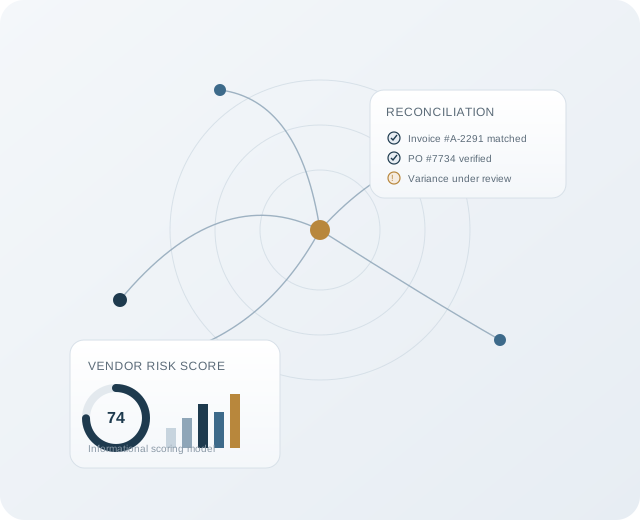
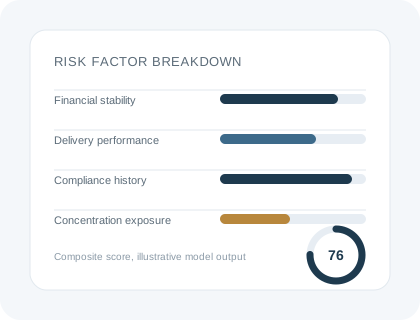
How organizations typically structure a vendor risk score
Vendor risk scoring is a way of translating scattered signals — financial filings, delivery history, compliance records, and concentration exposure — into a single, comparable indicator. Kioxla explains the common building blocks behind these models.
- Financial stability — solvency ratios, credit signals, and payment history trends.
- Delivery performance — on-time rates, order accuracy, and lead-time variance.
- Compliance history — certifications, audit outcomes, and regulatory findings.
- Concentration exposure — single-source dependency and geographic clustering.
Matching vendor ledgers with finance records
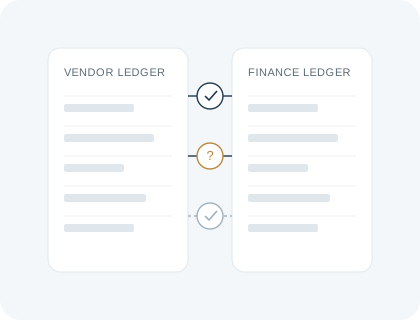
Supply chain finance reconciliation is the process of confirming that purchase orders, invoices, and payment records agree across the parties involved. Kioxla walks through the general logic used to identify matches, exceptions, and variances.
- Three-way matching between purchase orders, receipts, and invoices.
- Exception handling for quantity, price, and timing variances.
- Audit-trail documentation for finance and procurement teams.
A structured, four-step editorial process
Every guide on Kioxla follows the same review process before publication.
Research
We review publicly available frameworks, standards, and academic material on risk and finance operations.
Structure
Concepts are organized into plain-language explanations with consistent terminology.
Review
Drafts are checked for accuracy, neutrality, and clarity before publishing.
Publish
Guides are published as free, publicly accessible informational content.
Explore the fundamentals
A snapshot of the subject areas referenced throughout the site.
Scoring Methodologies
Overviews of weighted, tiered, and composite scoring approaches used in vendor risk assessment.
Invoice Matching
How two-way and three-way matching processes reduce reconciliation exceptions.
Supply Chain Exposure
Concepts behind geographic, single-source, and tiered supplier concentration risk.
Audit & Documentation
General practices for maintaining traceable, review-ready reconciliation records.
Compliance Signals
Common indicators referenced when assessing vendor regulatory standing.
Historical Trends
How performance history is typically weighted alongside current-state data.
Informational purposes only
Kioxla does not provide financial, legal, tax, or investment advice, and does not offer paid services, software, subscriptions, or consulting engagements of any kind. Content is intended to help readers understand general concepts and should not be relied upon for business decisions without independent professional review.
Have a question about a topic on this site?
Reach out and we will do our best to point you to the right general resources.